

India
You step out of the New Delhi airport at 1:30 in the morning and every sense gets flooded at once: the smell of spices, the gray of the dust, heat that still bears down on you, and the nonstop blare of horns. You don’t visit India, it grabs you — luxury rubs shoulders with destitution, splendor and squalor answer each other, and you come out of the jolt either recoiling from it or wildly in love. Few countries divide people the way this one does, and maybe that’s its finest paradox. You’ll find this account among my Asian travel stories.
The road here is an adventure all its own. Prettily painted trucks straddling two lanes, motorbikes carrying five with no helmets, packed auto-rickshaws, sacred cows crossing in the dead of night, herds of goats and troops of monkeys: you throw it all together, lean on the horn, and hit the gas so the obstacle moves aside. The white line just marks the middle of the road. The strongest gets right of way — the cultural approach is simply different.
Then comes the golden triangle, Delhi, Agra, Jaipur, packed with legendary places. The Taj Mahal, Shah Jahan’s declaration of love for his lost queen, rises through the great arched gateway in perfect balance: a white marble dome, a canal lined with cypresses, four minarets, arabesques of turquoise, coral and lapis lazuli inlaid in pietra dura. Farther on, Fatehpur Sikri, the city of victory turned ghost town for lack of water, sets out its perfectly preserved red sandstone around the tomb of Sheikh Salim Chishti and its pierced marble screens.
In Jaipur, the pink city founded by Jai Singh II, an astronomy enthusiast, the Jantar Mantar observatory reflects a nine-square plan where each quarter answers to a planet of Indian astrology. At the City Palace, you come across the two enormous silver urns Madho Singh II carried to London, filled with sacred water from the Ganges. A rite-of-passage journey your Karma won’t come through unscathed.
Stories and tips from my travels in India
-
 India
A taste of India
Namaste, The Taj Mahal, an ivory-white marble mausoleum on the South bank of Yamura River in Agra, is the most admired and photographed edifice in India. The building was and remains the most perfect ever built by man. It was commissioned in 1632 by Emperor Shah Jahan to express the love for his wife Empress…
3 10 min read -
 India
Fast and Furious
Namaste, I left the airport in New Delhi at 1.30 am local time… All my senses are immediately overwhelmed with smells, colors, and sounds… the heat is still overwhelming: it is still 100 ° F (currently the temperatures hit 116 ° F during the day – in the shade of course). I feel a bit…
22 7 min read
Frequently asked questions about traveling in India
My India plays out on a triangle of three cities and on the roads that tie them together, the ones where you sound the horn before overtaking a camel. The questions below run from the marble of the Taj Mahal to the five and a half metres of a sari, traffic included.
Which cities make up the Golden Triangle route in India?
Delhi, Agra and Jaipur, in that order for me. Those three cities form the tourist circuit known as the golden triangle, and the Taj Mahal, in Agra, sits at its centre. I landed at New Delhi airport before taking to the road. The exit sets the tone straight away: it was 1:30 am, the air still stood at 38°C, and daytime temperatures hover around 47°C. The rest of my stops across the region sit in my travels in Asia and the Middle East. You close the loop in a few days of driving, provided you accept the road as it is. The huge neighbour to the north fills my Chinese travel stories.
Why is India often called a land of contrasts?
Because everything arrives at once. Walking out of New Delhi airport at half past one in the morning, all my senses were overwhelmed with smells, colours and sounds, and the heat was still crushing. On the road near Agra I watched a shepherd push his goats along, a sacred cow standing its ground, a donkey, then a troop of monkeys crossing without warning. Marble and dust, silence and horns: that double register runs right through the marble and the dust of Agra. The same journey holds the Taj Mahal, thirty-five kinds of precious stone set into its walls, and a driving style I compared to a Bollywood version of Fast and Furious 6. The city-state at the other end of the continent is in my Singapore city stops.
Who did emperor Shah Jahan build the Taj Mahal for?
For his queen, who died in childbirth while giving birth to his fourteenth child, or his ninth depending on the source. The mourning shows in the garden, where the central canal is lined with cypress trees, the tree that stands for death, a detail I look at closely during my morning at the Taj Mahal. The decoration gives up nothing: up to thirty-five types of precious stone were used in the inlays, and a single flower can hold more than sixty separate pieces. What I had not anticipated was people’s curiosity, and the countless photographs I had to pose for, smiling throughout. The walking pace of the Himalaya waits in my Nepal trekking stories.
How long does it take to put on an Indian sari?
Ten minutes flat. That is how long a young woman from the hotel needed to dress me before the visit to the Taj Mahal. The traditional Indian sari I wore for the Taj Mahal measures 5.50 metres in length by 1.10 metres in width, which leaves plenty of fabric to tangle yourself in when you have never tried before. I went to meet the monument wrapped in that orange sari, and I worked out quickly that a foreign visitor dressed this way does not go unnoticed. Ten minutes for five and a half metres of cloth. Other fabrics and other colours were waiting further east, among the lanterns of the Mid Autumn Festival.
What should you see in Jaipur, the pink city?
The City Palace, the Palace of Winds and Jantar Mantar. Jaipur was founded in 1727 on a grid plan that splits the town into nine squares. The City Palace, also called Chandra Mahal, occupies the central square across seven storeys. The Hawa Mahal, raised in 1799 by Sawai Prapap Singh, lines up five floors, sixty-one airy loggias and nine hundred and fifty-three niches. At the Diwan-i-Khas, two silver jars recall the journey Madho Singh II made to London in 1901: they are said to weigh 2500 kilos and hold 8000 litres. Further north the road gives way to footpaths, as my routes through Nepal show. The city carries the name of its founder Jai Singh II, a keen astronomer and mathematician. From there you climb back out towards the whole continent, country by country.
What is driving like on the roads in India?
Like a Bollywood version of Fast and Furious 6: that was my feeling within the first few kilometres, and it is the very subject of my Indian roads in Fast and Furious. One morning I put a few questions to a local man. To overtake a cart, an auto-rickshaw, a lorry, a motorbike, a camel or an elephant, custom says you sound the horn to signal your intention. Horn first, then overtake. The road belongs to everyone: near Agra I saw a shepherd driving his flock of goats, a sacred cow, a donkey, then a band of monkeys crossing over. On another kind of ground the tracks are walked rather than driven, as in the trek to the land of dzos.
What is worth seeing around Agra besides the Taj Mahal?
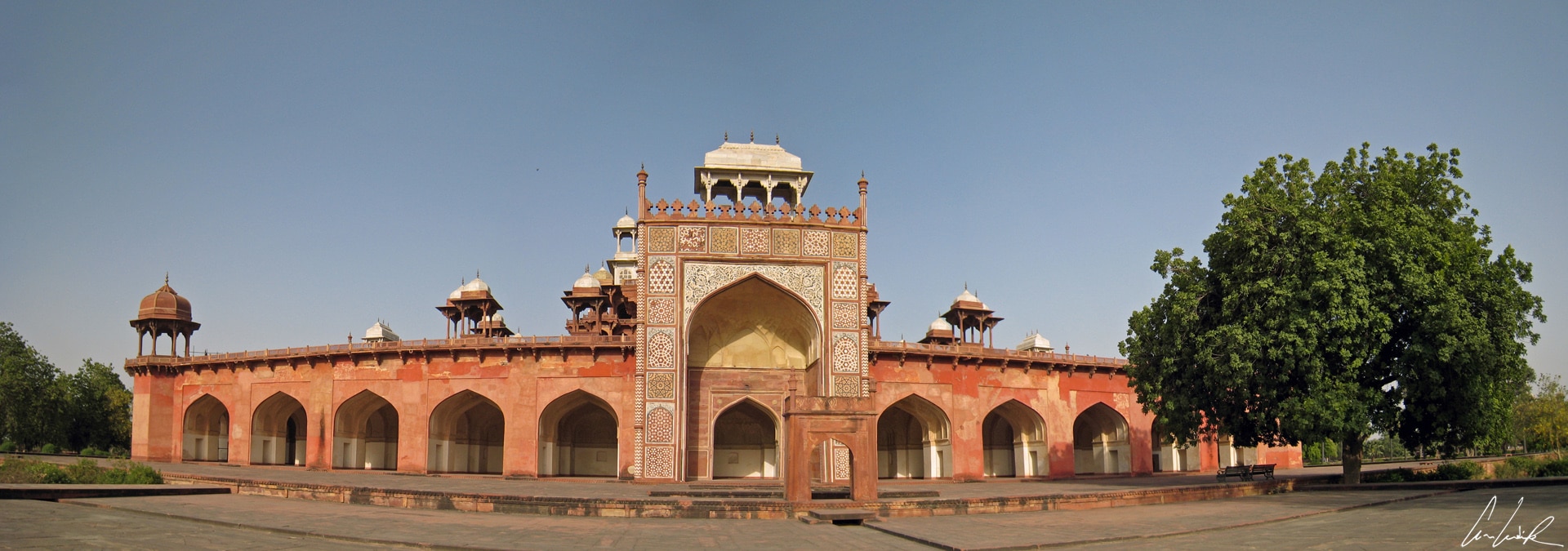
Sikandra, the Red Fort and Fatehpur Sikri. Sikandra, home to the mausoleum of Sikandar Lodi, lies 8 kilometres north of Agra; the monument stands 22 metres high, begun under emperor Akbar between 1556 and 1605 and finished by his son Jahangir in 1613. Gazelles and peacocks live in the park around it. The Red Fort of Agra, built from 1565 to 1574 by Akbar, raises crenellated red sandstone walls 20 metres high, and a maharaja, Amar Singh, was executed there in 1644: those two stops fill my day from Sikandra to Agra fort. Fatehpur Sikri, the imperial city, was abandoned fourteen years after it was completed. The forts of the Gulf are in my escapes across the Sultanate of Oman.
The countries of Asia and Middle East I have travelled
-


China
From the Hakka earth houses to Shanghai's lit-up skyscrapers, Fujian gave me Oolong tea, rice paddies, and a sense of time frozen for centuries. -

Nepal
From the Fokker leaping from 2,700 to 9,200 feet to Mustang's red desert, I walked to the rhythm of happy wanderers. Prayer flags snap in the wind that dehorns the dzos. -


Singapore
In Singapore, I traded the skyscrapers of Marina Bay for the spices of Little India and the lanterns of Chinatown. A city-state where nature slips all the way up onto the rooftops. -


Sultanate of Oman
Land of frankincense and Sinbad the Sailor, the Sultanate of Oman blends shifting deserts, dizzying canyons and sand-colored forts. I found deep quiet in its wadis, far from the Gulf's obsession with scale.

India is a place where ancient traditions meet timeless landscapes. From the high-altitude valleys of Ladakh to the colourful cities of Rajasthan, from Himalayan monasteries perched above dramatic mountain ranges to iconic landmarks such as the Taj Mahal, every journey reveals a new perspective on a country of extraordinary diversity.
What fascinates me most is the richness of contrasts. Remote mountain landscapes coexist with vibrant cities, while spirituality, history and nature intertwine at every stage of the journey. Each region offers its own atmosphere, its own light and its own story to tell.
Photography has taught me to appreciate those fleeting moments when light transforms a place and reveals its character. The first rays of sunlight touching a Himalayan monastery, the warm colours of Jaipur at the end of the day or a chance encounter with wildlife in the mountains are among the memories that stay with me the longest.
With camera in hand, I invite you to explore India through its landscapes, its heritage and the emotions it inspires.
Every journey is far more than a destination. It is a collection of encounters, light and emotions that I am delighted to share through my photographs and travel stories.
Lire en français


Travel by Theme