

The Best Islands to visit
An island sets its own pace: you arrive by sea or by air, and everything that follows belongs to it. From Madeira and Cape Verde all the way to Easter Island, this page gathers my island stories, with what there really is to do on the ground and my tips to plan the crossing.
Stories and tips from my travels in the islands
-

5 good reasons to travel to the islands
You can already imagine yourself enjoying a Key Lime Pie on the beach as the sun gradually declines over the horizon. The ocean adorns itself in its most beautiful evening dress. It’s the most pleasant way to end an intense day’s vacation spent discovering an island’s thousand riches: to come and admire a sunset on…
0 4 min read -

Which islands in the world to visit?
Looking for a unique island experience? Not sure which islands to visit? Look no further! Transparent blue seas, thriving coral reefs, lush jungles and velvety peaks, here’s a list of the world’s most beautiful islands to discover that you need to add to your list of places to visit as soon as possible… The islands…
0 14 min read -
 Madeira
, Hiking trails between Ocean and Mountain
Madeira Island presents such a diversity of landscapes that it is very difficult not to fall in love with its charm. If you are looking for a “nature” holiday where ocean and mountains meet, Madeira is for you ! Madeira Island, a true natural paradise, offers exuberant vegetation, volcanic mountains sculpted by erosion and unique,…
9 10 min read -
 Madeira
’s Levadas, Hiking along waterways
Discover the Levadas of Madeira, these irrigation canals testifying to the ingenuity of man to adapt to nature without damaging it, during beautiful walks along the water.
20 8 min read -
 Madeira
: Stopover in Funchal, the Capital of the Island of Flowers
The subtropical island of Madeira in the North Atlantic Ocean about 280 miles off the coast of Morocco attracts many tourists. Madeira is located at the same latitude as Bermuda, which lies further west in the Atlantic. Madeira covers an area of 286 sq. miles and is 35 miles from west to east and 14…
28 13 min read -
 Chile
Easter Island, « The Mysterious Island »
Like the island described in Jules Verne’s, “The Mysterious Island”, Rapa Nui or Easter Island, lost in the middle of the Pacific Ocean, holds many archaeological and cultural treasures. Indeed, Easter Island could have been an integral part of Verne’s series “Extraordinary Voyages”… The Moaïs of Easter Island, these sculptures from another world and another…
24 13 min read -
 Chile
Easter Island, Mysterious Rapa Nui
Isolated in the middle of the southeastern Pacific Ocean nearly 2,340 miles from Santiago de Chile, 2,646 miles from Tahiti, 4,650 miles from Honolulu, and 4,245 miles from Los Angeles, Easter Island is one of the world’s most isolated spots. It is about 15,3 miles long and 7,6 miles wide and covers an area of…
22 11 min read -
 Chile
Chiloé, Patagonia seen from the Sea
The Chiloé archipelago, in southwestern Chile, consists of 40 small islands, 36 of which are inhabited, and lies off the coast of the Los Lagos Region. The main island, Isla Grande Chiloé, is as big as Corsica and separated from the mainland by the Chacao Strait. It is accessible by ferry and 118 miles from…
22 12 min read -
 Southern USA
All Quiet on the Key West Front
The first thing that comes to my mind when talking about Florida, “The Sunshine State” and the Land of Flowers in Spanish, is, I confess, Sonny Crockett and Ricardo Tubbs in the TV series Miami Vice: a warm climate, streets lined with Palm trees, the long white sandy beaches of Miami, the upscale South Beach…
36 12 min read -
 Cuba
With Time, Everything goes away…
Havana, a last dive into Cuban culture… The colonial capital is a movie set lying somewhere between decay and sparkling beauty! With time… / With time everything goes its way / Even the dearest of memories…, sung by French singer Léo Ferré. Who would not dream of shooting a movie in the streets of Havana,…
38 11 min read -
 Cuba
The Old Good Days
“Muchos recuerdan los viejos tiempos…” (Let’s recall the old good days) Trinidad is a town full of history, not revolutionary history but architectural. It is located in the province of Sanctis Spiritus in central Cuba from about 225 miles from Havana and was founded in 1514 by Spanish conquistadors ! Trinidad is renowned for its…
31 9 min read -
 Cuba
Take the Time
Bienvenidos in the Ciénaga de Zapata reserve (Ciénaga meaning swamps), the largest and most important wetland in the Caribbean located about 100 miles Southeast of Havana in the province of Matanzas. The Zapata Peninsula includes the Ciénaga de Zapata Biosphere Reserve established in 2000 as a UNESCO site and the Ciénaga de Zapata National Park.…
32 7 min read -
 Cuba
Give it some Time
You have surely heard of the famous Bermuda triangle where everything disappears ? Well, in Cuba there is the tabacco triangle where everything disappears into smoke… ” Ne me contar la Historia del tabaco”, which may be translated as “Do not tell me nonsense”. In the region of Vuelta Abajo, in the westernmost corner of…
28 9 min read -
 Cuba
O Time! Pause in your flight
When we talk about Cuba, the first images that come to mind make our head spin and fill us with desire: Salsa, cigar and mojitos, a Cadillac from another time, colonial architecture, lobsters, white sandy beaches, and colorful fish. However, Cuba is much more than all this… The country has a strong and unique identity,…
28 7 min read -
 Cape Verde
From Hell to Heaven…
Todo fish? (Are you ok?) Sta fish (Everything is fine) Although the official language of Cape Verde is Portuguese, it is only heard in government offices and on the radio or television. The actual spoken language is Creole or rather “Creoles,” since each island has its own variant or dialect. The nature of the archipelago,…
18 7 min read -
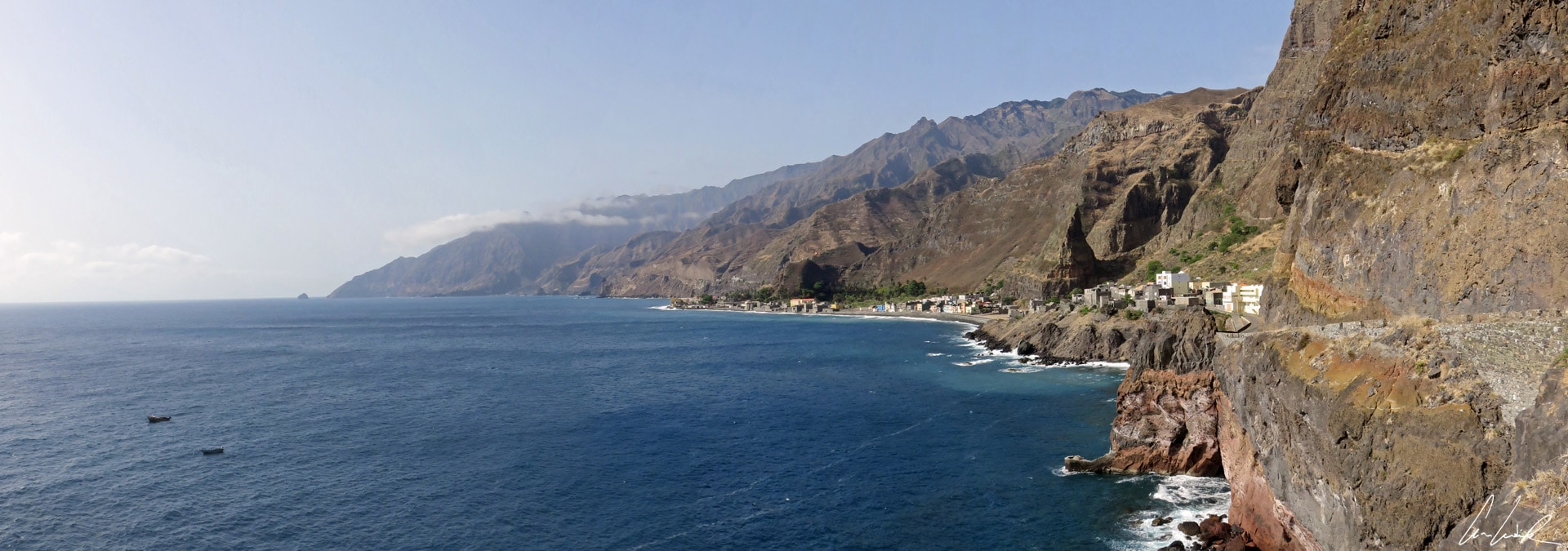 Cape Verde
All Roads lead to Rum…
Bom dia ! Mindelo is a must for all hikers attracted to the legendary beauty of the island of Santo Antão. This vast island, 300 square miles in size, is sparsely populated (just over 48 000 inhabitants) and the westernmost and largest of the Barlavento Islands of Cape Verde. Santo Antão is also the second…
24 7 min read -
 Cape Verde
A « tiny country » that has everything of a big one…
Bô ‘later’ Macaronesia (formerly called the Atlantides Islands) includes all islands and archipelagos in the North Atlantic Ocean from the Azores to Cape Verde, Canary Islands, Selvagens, and Madeira. Macaronesia lies between latitudes of Lisbon and Dakar. Cape Verde or Cabo Verde is a destination little known to the general public. Cape Verde is only…
12 9 min read -
 Madagascar
Spectacular end…
We leave the East to reach our final discovery (sniff, sniff): Ranomafana Park. This national park located in southeastern Madagascar was established in 1991 to conserve the unique biodiversity of the local ecosystem. It is one of the World Heritage Site rainforests. The park takes its name from the village of Ranomafana which means “hot…
0 5 min read -
 Madagascar
All quiet on the Eastern Front
Miarahaba anao aho, Here is one last little ride… and then departure… From Andringitra massif in the Adringitra National Park in the Haute Matsiatra region of Madagascar, we make a short detour to the East of the island to board the famous Fianarantsoa-Côte Est (FCE) railway that connects the high plateau city of Fianarantsoa to…
30 6 min read -
 Madagascar
The Andringitra, in love with trekking
Manao ahoana ianao ? (How are you ?) Ready to continue discovering the Big Island? We continue our journey on the RN7 to Tana, the capital, by the RN7, passing some unusual vehicles. Isalo Park looks like the set for a western and also has an atmosphere right out of “Gunfight at the O.K. Corral“.…
17 7 min read
Page 1 of 2
Practical guide and tips for organizing your trip to the islands
Lazing on the beach of a paradise island, sailing from one island to the next aboard a yacht, hiking through breathtaking scenery — lush forests, volcanoes — or setting off to meet an island’s endemic wildlife: there is something here for every taste!
The only question worth asking is which island will you visit?
What is an island?
An island is a piece of land above water, surrounded by it either permanently or with the tides. Islands range from 0.15 km² (an islet) to two million km² — the size of Greenland.
Did you know that 460,000 islands have been recorded worldwide (source: the Global Island Database) and that 13% of UNESCO World Heritage sites are on an island?
Look closely at a world map and you will see that islands are scattered across every corner of the globe. Atlantic, Pacific and Indian Oceans, Mediterranean, Aegean, Adriatic or Caribbean Sea: these specks of land lie strewn across the blue immensity.
At the risk of disappointing the adventurer in each of us, landing on an uncharted island and playing Robinson Crusoe seems unlikely in the age of satellites. And yet, you will object, Chuck Noland was well and truly “Cast Away” — with Wilson, his volleyball.

How many new islands are spotted each year is hard to say. There is no official count today.
An island can appear because the water rises or because the ground collapses — after an earthquake, for instance — cutting off pieces of land that were already above the surface.
As for global warming, it is uncovering new islands in areas now free of ice, in the Arctic and the Antarctic. But islands are most often volcanic in origin, and come in two kinds: hotspots (Hawaii or Réunion) and arcs.
« This is my island in the sun Where my people have toiled since time begun I may sail on many a sea Her shores will always be home to me » (Harry Belafonte – Island in the Sun)
Island travel: awakening the five senses
Wrapped in an air of mystery, islands cast a spell on the traveller. Exotic wildlife and plants, dense greenery, a turquoise ocean, sunsets on a grand scale, barefoot walks on the beach by moonlight: an island holiday sets every one of your senses humming and leaves memories that stay with you.
Islands: a spectacle between land and sea

What I love about islands is how many landscapes lie within reach. Picture yourself going from green volcanic country to a beach lined with coconut palms in under an hour!
Then there is the burst of colour of the exotic fruit and flowers. And when you tire of admiring the shades of blue where sky and sea blur into one, you will put on a mask and snorkel and go and meet the lagoon’s residents — an unforgettable encounter with underwater life, where countless species of fish brush past one another among many-coloured corals.
Tasting the islands’ own cooking

Let your taste buds discover a thousand and one local flavours. Island cooking moves between the sweet, the salty and the spicy. It is made with fish barely out of the water, fruit picked that morning and vegetables from the market. Smoked poultry from the Antilles, grilled lobster from Cuba, salt cod fritters or Guadeloupe’s féroce d’avocat, Réunion’s sausage rougail, Madeira’s espetada — beef skewers grilled over a fire scented with bay leaves — and the gentle blend of cinnamon, coconut and rum in Puerto Rican coquito: so many local dishes to set your mouth watering.
And do wander through the local markets to taste what grows here: mangoes, bananas, coconuts, watermelons, yams, pineapples, vanilla…
Listening to the rustle of the waves

Here the sounds are hushed, and they belong to the island alone. Listen to the soft wash of the ocean as the water rises and falls over sand or shingle: soothing, isn’t it? Elsewhere on the island those same waves crash loudly against steep cliffs, throwing up plumes of spray.
At the harbour, everything stirs when the tide comes back in, and the seabirds greet you with their unmistakable calls.
Lastly, the sound of the islands is also local songs and dances, the cheerful rhythm of ukuleles and timples, the clatter of chácaras. On an island, a festival of sound is second nature.
Feeling the sand give way underfoot

There is nothing quite like the feel of soft sand between your toes. Sand also lends itself perfectly to castle-building, leaving your creativity free rein! Feeling the warmth of the sun on your skin, swimming in clear water among a shoal of small fish, feeling stress and tension vanish on the spot as you bathe in a natural volcanic hot spring: these are sensory experiences you can only live on an island.
Breathing in the scents carried off the sea

The scent of the ocean! The wind carries the smell of plants and flowers, mixed with salt spray, reminding you at every moment that you are on an island. Treat yourself to a fragrant stop in the middle of the ocean by discovering how rich in plants some islands are: breathe in the sweetness of frangipani, the soft musk of hibiscus or the vinegary scent of arum. Every island is a blend of smells of its own!

5 good reasons to travel to the islands
The call of the islands is irresistible, and there are five excellent reasons to answer that call.
The world’s islands are dream destinations, each with its own unique charm. Let’s explore the top five reasons to choose an island as your next travel destination.
Whether you’re drawn to white-sand beaches, marine biodiversity, cultural richness or tranquility, islands have it all.
Prepare to be convinced that your next adventure must take place on an island paradise.

Which islands in the world to visit?
When the desire arises to get away from it all, the islands of the world often become the answer to our travel dreams.
These isolated jewels in the middle of the oceans offer extraordinary charm and diversity. But with so much to choose from, how do you decide which islands to visit?
We’ll guide you through an enchanting exploration of our planet’s most captivating islands. From the white sandy beaches of the Caribbean to the majestic volcanoes of Indonesia, from the rich cultures of the Mediterranean to the natural treasures of Oceania, you’ll discover an island world with a thousand facets.
Get ready for a virtual journey through the world’s islands and inspiration for your next island adventure.
Frequently asked questions about traveling in the islands
An island is not a beach: it is a constraint. Easter Island sits 3 700 kilometres from the nearest coast, Chiloé counts forty islets of which thirty-six are lived on, and Fogo keeps going at the foot of a volcano that woke up in 2014.
Which country does Easter Island belong to and where is it?
To Chile, 3 700 kilometres off its coast. It therefore sits in Polynesia by culture and in South America by administration, which explains the frequent confusion. The island measures 162 square kilometres, about the size of a large French commune, and a Dutchman named Jacob Roggeveen came ashore there on an Easter day in 1722, hence its European name, a history I pick up in this stay on the mysterious island. The inhabitants call it Rapa Nui. The Tapati festival has been held there every year since 1975 and restages the old trials, which my week among the Rapa Nui recounts.
How many moai are left on Easter Island today?
Eight hundred and eighty-seven statues recorded, many lying down. Ahu Tongariki lines up fifteen of them, raised again after the 1960 tidal wave that had scattered them. Ahu Akivi is the exception: its seven scouts are the only ones facing the ocean. The largest moai ever raised, Te Pito Kura, measures around 12 metres for 80 tonnes, and the red stone hats called pukao weigh 9 to 12 tonnes each, which I set out in this inventory of the Rapa Nui ahu. In the Rano Raraku quarry, Te Tokanka reaches 21,65 metres and never left the rock, a visit recounted in my climb to the Rano Kau volcano.
Which island should you pick for walking rather than beaches?
Madeira, no argument, then Santo Antão in Cape Verde. Madeira lines up more than 2 150 kilometres of levadas, irrigation channels turned into near-flat paths that you follow for hours without ever climbing, which this walk along the water recounts. For height gain, the crossing climbs from Pico do Arieiro at 1 818 metres to Pico Ruivo at 1 862 metres on a fully paved track. Santo Antão plays the opposite card: 779 square kilometres, second largest island of the archipelago, a summit at 1 979 metres and cobbled mule paths, which I describe in this Cape Verde island of Santo Antão.
How do you travel between the islands of one archipelago?
By boat, by light aircraft, and often at the weather’s pace. Chiloé counts forty islets of which thirty-six are inhabited, and its main island is the size of Corsica: the ferry replaces the bridge, and the timetable depends on the wind. Sixty churches of the Chilote school were built there in wood, sixteen of them listed as world heritage in 2000, among them Tenaún, raised in 1842 with its three towers, which I recount in this Patagonia seen from the sea. In the Florida Keys the logic inverts: 42 bridges link around 1 700 islands, including the Seven Mile Bridge and its 11 kilometres, described in my road down to Key West.
When is the best time to travel to a tropical island?
The dry season, and it shifts from one ocean to the next. In Madagascar the rains fall from November to April and cut the roads outright: Bekopaka becomes unreachable, ferries stopped and track impassable. I was there in July and August, and it already took 4 hours to cover 95 kilometres of track before the ferry across the Manambolo, which this approach to the Tsingy recounts. At Chiloé the window is shorter still: Humboldt and Magellanic penguins nest together at Puñihuil from mid-September to late March, the only site in Chile where both species share one island, as my stop at Puñihuil notes.
Can people keep living on a volcanic island after an eruption?
Yes, and the people of Fogo have proved it twice. The Pico stratovolcano rises to 2 829 metres and woke up in late November 2014, nineteen years after an eruption in 1995. The lava river drowned two hamlets of Chã das Caldeiras and left 1 500 people without homes, school or land. They came back. The reason lies in the ash: rich in minerals, it works as a fertiliser fallen from the sky and plants grow back faster, which I saw with my own eyes in this climb from hell to heaven. The coffee grown there ranks third best in the world, which my round of grogues and coffees recounts.
Check out our other themed trips
-

Autumn travel: Best Destination for Fall
Autumn gives the trails back their silence: colors take over from the crowds, the light softens and destinations finally breathe again. This page gathers my… -

Best places to visit in Winter
Winter is my season: white forests in Lapland, dog-sled safaris, northern lights and Icelandic winters. This page gathers all my winter travel stories and… -

Best Summer Holiday Destinations
Summer opens up the wide spaces: the midnight sun in Lapland, Icelandic summers, hiking trails and evenings that never seem to end. This page gathers my… -

City Walks
A city reveals itself on foot, or not at all. From Shanghai to Valparaiso and on to New Orleans, this page gathers my favorite city walks: neighborhood routes… -

Desert Travel Experiences Around the World
No two deserts are alike: the dunes of the Wahiba Sands, the expanses of the Namib, the salt and lagoons of the Atacama. This page gathers my desert travel… -

Most Beautiful National Parks in The World
A national park is best told from the trail, not from the map. From Torres del Paine to Abisko by way of Etosha, this page gathers my national park stories… -
Spring best places to travel
Spring is the season travelers overlook, and that is a mistake: days grow longer, nature wakes up and the crowds have not arrived yet. This page gathers all my… -

Wildlife Watching
Watching a wild animal starts with accepting that the animal decides. Reindeer and elk in Lapland, Atacama flamingos, coatis at Iguazu: this page gathers my…
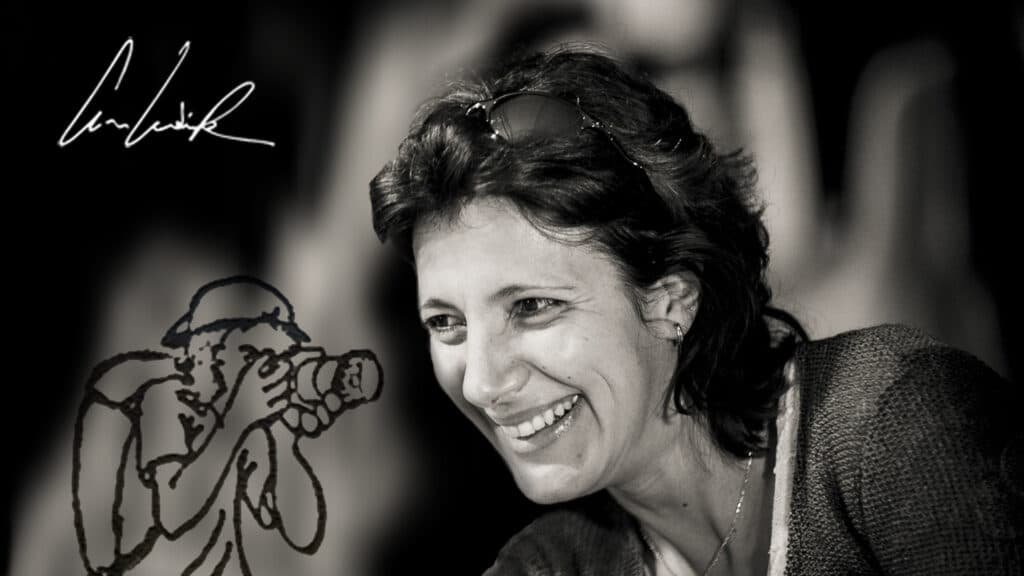
Hello, I am C-Ludik, a traveller with a passion for nature and photography. Travel is far more than moving from one destination to another.
It is an invitation to slow down. To watch the last light of day settle on a quiet village, to wait for an animal to appear on the horizon, to listen to the distant roar of a waterfall or to be surprised by a landscape where you least expect it.
Through ’Tween Here and There, I share the stories, photographs and emotions gathered along the way. From the deserts of Namibia to the Himalayan peaks, from European villages to the far shores of the Pacific, each journey becomes a story to tell and an invitation to see the world differently.
With camera in hand, I invite you to follow me along winding roads and remote trails, towards the places, the light and the encounters that turn a simple trip into a lasting memory. Because the greatest adventures sometimes begin far away (there)… and sometimes right at home (here). Welcome to my five-senses odyssey across the world, where distant horizons meet the wonders of everyday life.
Every journey is far more than a destination. It is a collection of encounters, light and emotions that I am delighted to share through my photographs and travel stories.
Lire en français


Travel by Theme