This site uses cookies and gives you control over what you want to accept or not
Select Page
A Springtime of Travel: the top destinations for a Spring break
After winter hibernation, let’s embrace the pleasures of the great outdoors ! With the return of the migratory birds and the colorful vegetation, spring is the ideal time to travel.
The sun’s rays are warmer, and the days are longer. The first growths are appearing, and plants are in bloom.
Nature awakens everywhere in the northern hemisphere, while the southern hemisphere promises a change of scenery in the mildness of autumn.
Spring is a fertile inter-season offering a variety of destinations to explore.
As a bonus, popular summer vacation destinations are less crowded in spring.
it’s a great time to discover a country more serenely.
Our spring travel stories
The days are getting longer again, the air is getting warmer – Spring has sprung! Full of new energy, let all your senses discover the magic of this time of year. Does the arrival of spring whet your appetite for travel ? Find your ideal Spring destination here.
Niagara Falls attract approximately 20 million visitors each year. They form a natural boundary between the province of Ontario in Canada and the State of New York in the Eastern United States and are located 17 miles northwest of Buffalo, New York, and 75 miles...
Located 22 miles from Swakopmund, the city of Walvis Bay (pronounced « vahl-fis bay ») is a rather unusual place. Travelers often hesitate to visit this small industrial port town, which is often covered by fog. However, it is an essential break in the journey...
After a long day driving through desert landscapes, we finally reach the ocean. Stunning waves of sand dunes undulate as far as the eye can see along the Atlantic Ocean. Here we are on the Skeleton Coast, the northern part of the Atlantic Coast of Namibia...
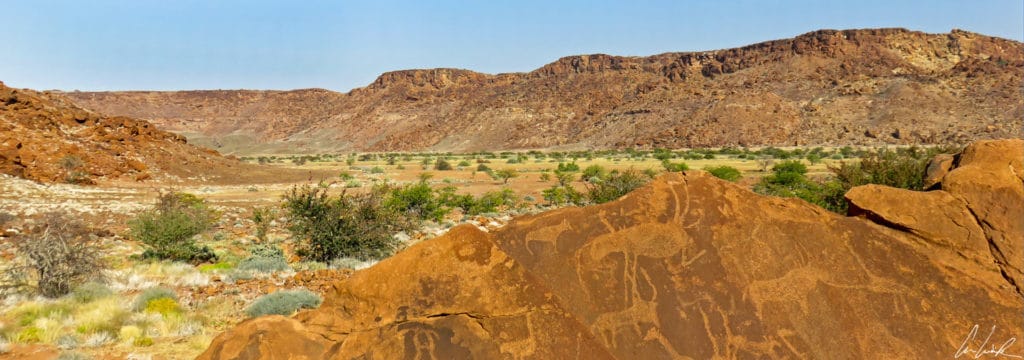
Let's continue « Travelling Through The Wild Side » to the reggae music of Namibian musician Ras Sheehama and discover Damaraland, through its art and geology... « Travelling through the wilderness / I keep on travelling and travelling… / Through the wilderness »...
The small town of Sesfontein and its surrounding area features unique fauna and flora. It lies in the Kunene region of northwestern Namibia between Kaokoland (Distant land) and Damaraland (Land of Damaras) and about 93 miles from the regional capital Opuwo. The...
Kaokoland - translate as “distant land” - is a region unlike any other. A former Namibian Bantustan, Kaokoland is located in the Kunene region in northwestern Namibia. The term Bantustan was first used in the late 1940s and is derived from Bandu word for “People.”...
For most people, African fauna consists of felines or the famous “Big Five”-- the five African animals that all travelers dream of seeing and photographing. The expression “Big Five” does not refer to the animals of Africa that are the largest in stature, but...
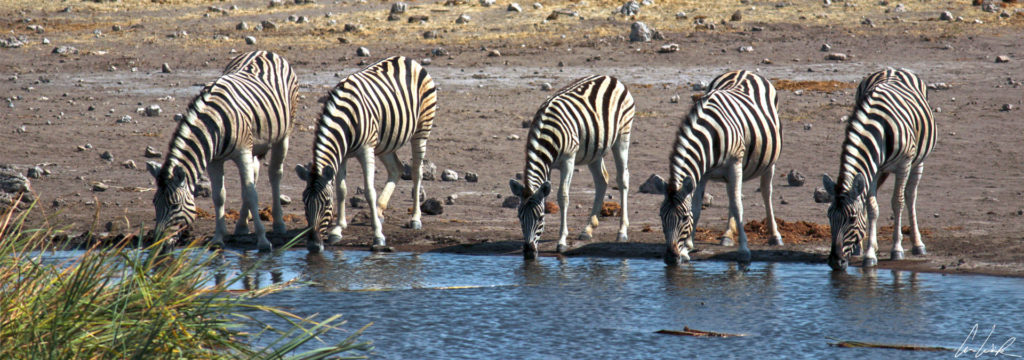
Namibia's animals consist of many species: 200 mammals, 645 birds, 250 reptiles, and more than 6,300 different insects. One-quarter of these are endemic to Namibia... It is also no secret that Etosha National Park is the best place to observe Namibian fauna,...
Namibia is a marvel for all those seeking distant new horizons... It is unthinkable to go to Namibia without going on a safari! Etosha National Park is one of the largest conservation areas in Africa and one of the best places to observe abundant wildlife roaming...
How did lake Otjikoto develop? Only 110 yards from the main road, Route B1, to Etosha National Park, there is an expanse of turquoise water well hidden from sight behind gigantic fig trees and euphorbia. Lake Otjikoto, located in Namibia’s Oshikoto region about 12...
What is Waterberg Plateau Park ? The Waterberg is a vast plateau of red rock 42 miles south-east of Otjiwarongo and about 186 miles northeast of Namibia's capital, Windhoek. The mountain owes its name to the springs surfacing on its lower slopes and its lush...
Madeira Island presents such a diversity of landscapes that it is very difficult not to fall in love with its charm. If you are looking for a “nature” holiday where ocean and mountains meet, Madeira is for you ! Madeira Island, a true natural paradise, offers...
Discover the Levadas of Madeira, these irrigation canals testifying to the ingenuity of man to adapt to nature without damaging it, during beautiful walks along the water.
The subtropical island of Madeira in the North Atlantic Ocean about 280 miles off the coast of Morocco attracts many tourists. Madeira is located at the same latitude as Bermuda, which lies further west in the Atlantic. Madeira covers an area of 286 sq. miles and...
South Dakota, a state of USA Middle West imbued with Indian culture and characterized by the rolling Black Hills, is full of surprises: Badlands National Park and its dramatic reliefs, Mount Rushmore and its monumental sculptures, and the annual motorcycle rally in...
"Hau", as we say in Lakota language ! South Dakota can be considered both as part of the Midwest and of the Great Plains regions. The state’s name is taken from the Lakota and Dakota Sioux Native American tribes. The Missouri River divides the State into two...
The picturesque village of Roubion (in Provencal, "Robione" and "Rup" means rock with cliffs) is perched like an eagle's nest on top of a 4,380-feet high in France, cliff and surrounded by walls dating from the middle Ages. This medieval town was built on a rock...
If you are looking for a gateway into the French Alps that combines mountains, culture, and sunshine, then the Mercantour National Park is your destination. Discover Boréon, the Madonne de Fenestre, the Gordolasque valley and the prehistoric site vallée des...
For anyone asking, upon arrival in Europe, to see the most stunning sites of the Alps, the Dolomites (Dolomiti in Italian) will certainly be one of the top three. This majestic mountain range located in northeastern Italy highlights an amazing land of adventure....
If you like moonlike landscapes and seek loneliness... look no further. Bisti Wilderness is the place for you! Are you ready for a "Man vs. Wild" but without Edward Michael "Bear" Grylls to accompany you ? Off State Highway 371 at Road 7297, about 35 miles south of...
New Mexico is trapped between the "Great" Arizona, the "Friendship" Texas and south of the "Centennial" Colorado. New Mexico, one of the southwestern States is often left out by tourists visiting the western United States. It is a pity because New Mexico is total !...
The lyrics of Les Acadiens by French singer Michel Fugain (Les Acadiens) run through my mind, “Y a dans le sud de la Louisiane / Et dans un coin du Canada / Des tas de gars, des tas de femmes / Qui chantent dans la même langue que toi. Tous les Acadiens, toutes les...
As seen from the air, the blue and green reflection of the sun in the Mississippi River creates a strange effect... Water is everywhere, between the ocean, the river and Lake Pontchartrain ! The roads are suspended above the water on pillars and the vegetation has...
Mmmmmmm ... (etc) / In noreni per ipe / in noreni Cora / tira mine per ito / ne domina, with the music of Vangelis in mind I step into the New World ! Here I am in the footsteps of Christopher Columbus, on my way to The Conquest of Paradise. But am I already there?...
Enough of the city, cars and crowds! We head East. The city disappears slowly and gradually, houses become sparser and the land bare before giving way to vast stretches of sand and Rocky Mountains. Finally, the first wind turbines announce that Palm Springs is...
Beverly Hills (even without Brandon & Branda), Santa Monica, Venice, Malibu (I am sure you already have a mental image of Pamela in a red swimming suit running along the beach to give mouth-to-mouth to a careless surfer)... are evocative names glittering on the...
It is time to leave San Francisco (another well know city of Western USA) and its mists behind and head towards the Pacific Ocean and the 17-mile Drive. The 17-mile Drive is a scenic coastal road running from Pebble Beach to Pacific Grove on the Monterey peninsula...
San Francisco in Northern California, commonly abbreviated SF or more colloquially Frisco, is one of the most beautiful cities on the West Coast of the United States. Go, relax, close your eyes and imagine yourself for ten minutes at the wheel of a Ford Mustang...
您好(Ni hao), The continuation and end of our discovery of the Fujian Province in Southeastern China. The small town of Gutian, located in the Northeastern part of the Fujian Province is a historic place for the Chinese. Indeed, it is in Gutian that Mao Zedong, Zhu...
Ni hao, Fujian Province abbreviated "Min", is located in Southeast China, bordering, along the East China Sea, the South China Sea, and the Taiwan Strait. The island of Taiwan itself is further off to the Southeast. While Fujian is resolutely turned towards the sea...
The Ultimate Guide to Spring Travel: It’s time to organize your spring holidays !
Hooray for spring ! Say goodbye to dreariness and cold: spring is slowly coming. It’s time to wake up and have some fun.
The days are getting longer, and the sun is shining, temperatures are mild and good cheer is in the air.
The flowers show: mauve crocuses peeking through the snow and narcissus blooming. The rosy bloom of the peach trees is a promise of fruit to come. Light fragrances fill the air.
The landscape is in tune with the season, and the world returns to life. Without a doubt, spring symbolizes life in all its dimensions.
« Now here comes the spring And my world wants to rise and shine Now here comes my heart And my heart wants to know what’s mine All for a brighter time ». » (Tony Orlando & Dawn – Here Comes the Spring)
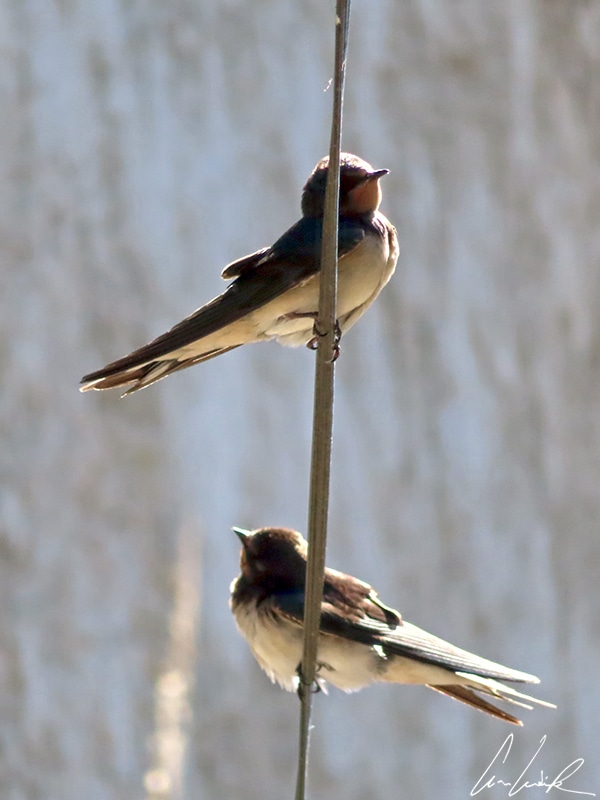
For one swallow does not make a spring… What about two swallows?
Spring… with all the senses
Let all your senses discover the magic of springtime ! Enjoy the flowers bloom, the birdsong returns, the longer days and the warmer temperature…
Look at all the rebirth around you
The ground beneath you is ever-changing. Plants sprout up and peek into the world. Colors change from brown to green, and snow melts away and shows the earth again.
How many different colors of flowers can you find in spring ? How many species of birds carrying grass and twigs to build nests can you watch ?
The taste of spring
When springtime comes, many people start to naturally crave the bright, crisp, mouth-watering spring fruits and vegetables. There are so many fruits available to taste on the spring: strawberries, cherries, apricots, Pineapples, mangos… And getting your daily dose of veggies is fun and so easy: asparagus artichokes, carrots, radishes, peas and so much more.
Birdsong is the music of spring
If you listen carefully, you can hear the birds tweeting, particularly in the early morning even in the inner cities. Take a walk in the forest, pause a moment to listen to the symphony of chirps, craws, and tweets from many birds. You have that orchestra to yourself.Take also a moment to listen the bees going from flower to flower, collecting their pollen and nectar, in a garden or meadow. Also listen to the water flowing over rocks and through eddies. It is life’s simple pleasures.
Feel the warmth
On Spring, the sun’s rays are warmer. One of my favorite sensations during spring is the feeling of the warm sun on my face, the perfect sensation after a long winter.Spring affords many other opportunities for tactile discovery. Touch the soft and silky buds of a tree between your fingers or have blades of grass tickle your toes.
The scent of the nature
Spring is full of wonderful smells. The smell of fresh cut grass, dirt, flowers and a spring rain storm. Research has even shown that the smell of cut grass can make us happier and reduce stress! Cut grass triggers the production of GLV (Green Leaf Volatiles) to warn nearby plants that danger as afoot. You might be fond of the smell of cut grass, but it’s a plant cry for help.Although the days are starting to warm, the rain doesn’t leave us just yet. When you wander outside after a storm has passed, it often smells warm, damp and earthy. the scent of rain as it hits the ground has a name: it is called petrichor, which is the smell of an oily substance produced by wet rocks.
5 top reasons to travel in spring
Immerse yourself in the enchanting world of spring travel, a season that awakens the senses and nourishes the soul. Spring is much more than a meteorological transition, it’s an invitation to escape, discover and reconnect with nature.
Spring offers a unique opportunity to discover the diversity of our world.
Explore picturesque spring destinations on every continent, from cherry blossom trees in Japan to heavenly beaches in South America, colorful European festivals, African safaris in the dry season, and adventures in Australia.
Discover how each continent comes alive in a different way in spring, and get ready for a memorable journey.
Hi ! My name is C-Ludik and I’m the person who runs this creative space. Welcome to ‘Tween here and there, a travel blog that shares awesome destinations, stunning photographs and captivating travel stories from around the world. No two landscapes are ever the same because of a different light, different conditions… whether it's a new or an old place. That’s what I love about nature and landscape photography. As the famous Ibn Battuta traveler said: « traveling – it leaves you speechless then turns you into a storyteller ». He’s right ! Behind the photographer, I see myself more as a storyteller. When I arrive on a place, I try to respond to what I see and tell the story of the land. If you love travel, exploring new places, and seeing more of this beautiful world then you'll be right at home here. ‘Tween here and there is the travel inspiration for those with full-time jobs and for those in search of any off-the-beaten track destinations around the world, near and far.